


Storage tanks are essential components in various industries, particularly in the oil and gas, chemical, and water treatment sectors. They are used to store liquids, gases, and sometimes solids under controlled conditions. Here’s an expert overview of the different types of storage tanks and their applications:
1. Fixed Roof Tanks
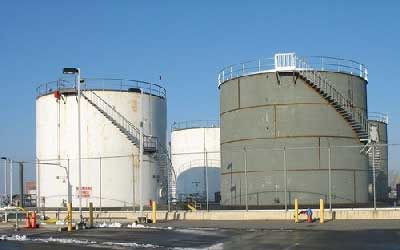
- Description: These are the simplest form of storage tanks, consisting of a cylindrical shell with a permanently affixed roof. They are commonly used for storing liquids at atmospheric pressure.
- Types:
- Cone Roof Tanks: Have a conical roof structure and are widely used for storing lower volatility liquids such as water, diesel, and chemicals.
- Dome Roof Tanks: Feature a domed roof and are often used for the storage of liquids and gases that require additional containment measures due to their properties.
- Applications: Fixed roof tanks are typically used for the storage of less volatile substances like water, fuel oils, and some chemicals.
2. Floating Roof Tanks
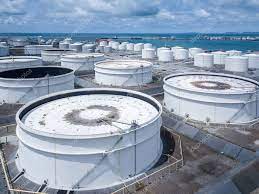
- Description: These tanks have a roof that floats on the surface of the stored liquid, rising and falling with the liquid level. This design minimizes the evaporation losses of volatile liquids.
- Types:
- External Floating Roof Tanks (EFRTs): The floating roof is exposed to the atmosphere. Used for storing petroleum products such as crude oil and gasoline.
- Internal Floating Roof Tanks (IFRTs): Have a fixed outer roof and a floating internal roof. These offer additional protection from external elements and are used for similar applications as EFRTs but provide better control over emissions.
- Applications: Primarily used in the petroleum industry to store volatile liquids like crude oil, gasoline, and other petrochemicals.
3. Bullet Tanks
- Description: Cylindrical, horizontal tanks with rounded ends, resembling bullets. They are designed for high-pressure storage and are commonly used to store liquefied gases.
- Applications: Ideal for storing gases such as propane, butane, and ammonia at high pressures. These tanks are commonly found in industrial and chemical plants.
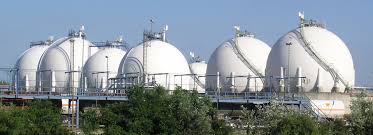
4. Spherical Tanks
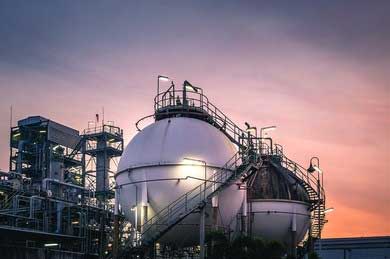
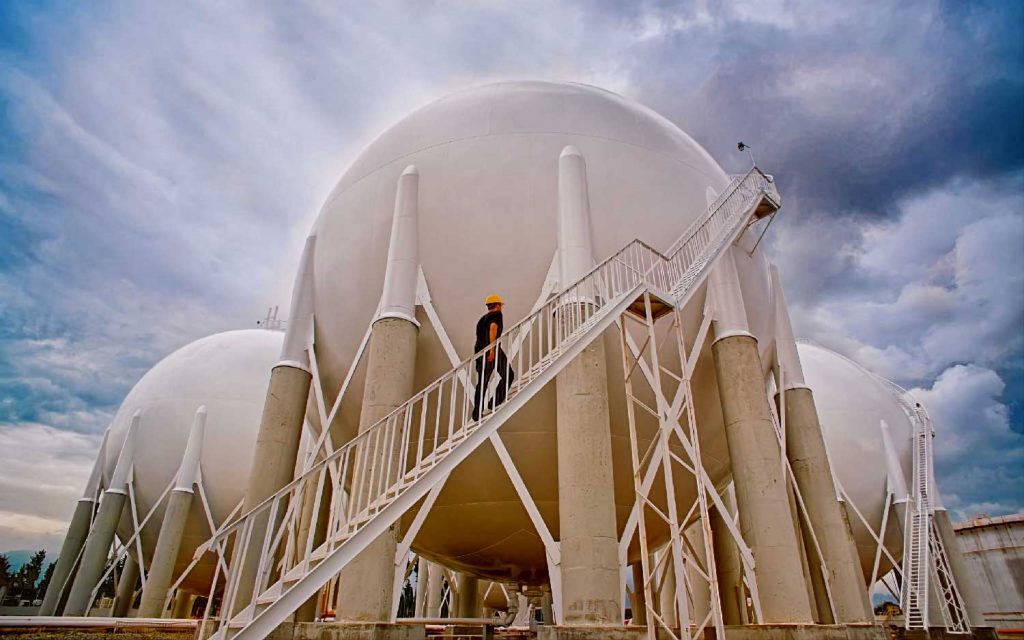
- Description: These tanks have a spherical shape and are designed to store gases and liquids under high pressure. The spherical shape evenly distributes stress, making them suitable for high-pressure applications.
- Applications: Typically used for storing high-pressure gases such as LNG (liquefied natural gas), LPG (liquefied petroleum gas), and other industrial gases.
5. Cryogenic Tanks
- Description: Specialized tanks designed to store liquefied gases at extremely low temperatures. They are double-walled, with an inner vessel made of stainless steel and an outer vessel providing insulation.
- Applications: Used for storing cryogenic gases such as liquid nitrogen, oxygen, argon, and LNG. These tanks are essential in industries like healthcare, energy, and manufacturing.
6. Underground Storage Tanks (USTs)
- Description: Tanks that are buried underground, primarily used to store liquids, especially hazardous substances. They minimize the risk of fire and environmental contamination.
- Applications: Commonly used at gas stations for storing gasoline and diesel fuel. Also used in industrial settings for storing chemicals and waste.
7. Aboveground Storage Tanks (ASTs)
- Description: Located above the surface and can be either horizontal or vertical. They are easier to inspect and maintain compared to USTs.
- Applications: Used for a wide range of applications, including the storage of petroleum products, chemicals, water, and other liquids.
8. Hopper and Silo Tanks
- Description: Tanks with a conical bottom (hopper) or tall cylindrical shapes (silos). These tanks are designed for storing and dispensing bulk materials like grains, cement, and powders.
- Applications: Commonly used in agriculture for grain storage, and in construction for cement and aggregate storage.
9. Bladder Tanks
- Description: Flexible tanks made of rubber or plastic that can be used to store liquids and gases. They are collapsible and can be transported easily.
- Applications: Used in military, emergency response, and remote locations where traditional tank construction is not feasible. They store potable water, fuels, and other liquids.
10. Hydropneumatic Tanks
- Description: Pressurized tanks that contain both water and air. They are used to regulate water pressure in distribution systems.
- Applications: Commonly found in water treatment and distribution systems, ensuring consistent water pressure.
Considerations for Selecting Storage Tanks
- Material Compatibility: The tank material must be compatible with the stored substance to prevent corrosion and contamination. Common materials include carbon steel, stainless steel, and fiberglass-reinforced plastic.
- Capacity and Size: Determined by the storage requirements and available space. Larger tanks are used for bulk storage, while smaller tanks are used for intermediate storage.
- Regulatory Compliance: Storage tanks must meet industry regulations and standards for safety and environmental protection. This includes standards set by organizations like the American Petroleum Institute (API) and the Environmental Protection Agency (EPA).
- Location and Environmental Conditions: Considerations include whether the tank will be aboveground or underground, the climatic conditions, and proximity to populated areas or sensitive environments.
In summary, storage tanks come in various shapes, sizes, and designs, each suited for specific applications and storage requirements. Understanding the types and their applications helps in selecting the right tank for a particular need, ensuring safe, efficient, and compliant storage solutions.
Leave A Reply